
Mastering Curved Chunkers and Thinners: Essential Tools for Professional Dog Grooming
Share
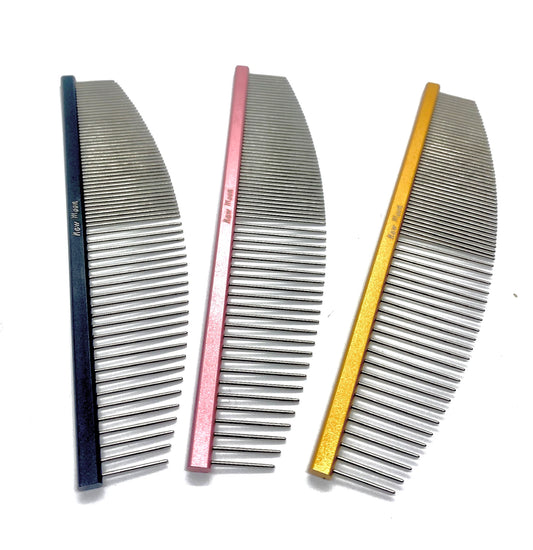
In the world of professional dog grooming, achieving a polished, natural finish requires the right tools. While straight shears remain staples, curved chunkers and thinners have become indispensable for creating seamless, rounded contours that enhance a dog's natural shape. These specialized shears follow the body's curves effortlessly, reducing harsh lines and delivering superior results—particularly on breeds like poodles, bichons, doodles, and spaniels.
Understanding the Difference: Chunkers vs. Thinners
The primary distinction between chunkers and thinners lies in their design and function:
-
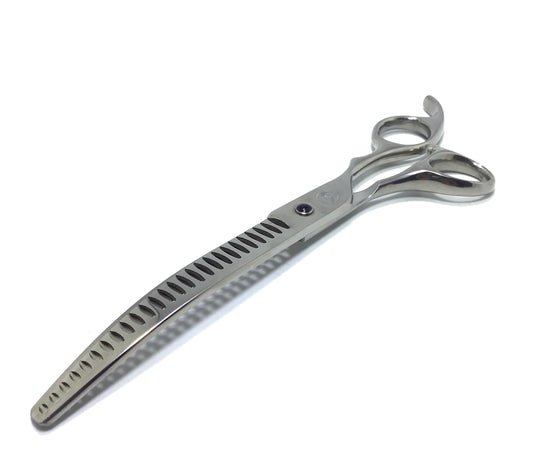
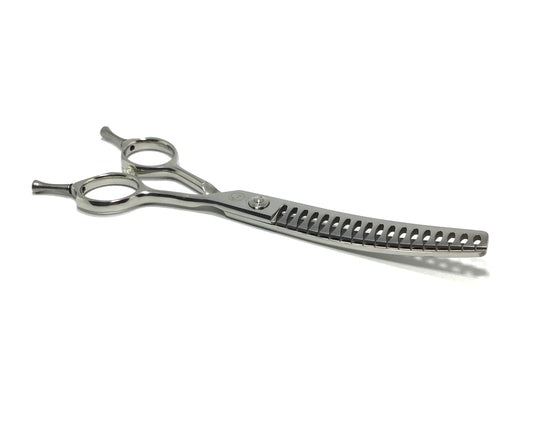
Chunkers: Feature wider-spaced teeth (typically 22–35). One blade is solid, while the other has broad, often T-shaped teeth. They remove significant bulk quickly, making them ideal for initial shaping and texturizing dense or curly coats. Chunkers excel at reducing volume while preserving natural texture.
-
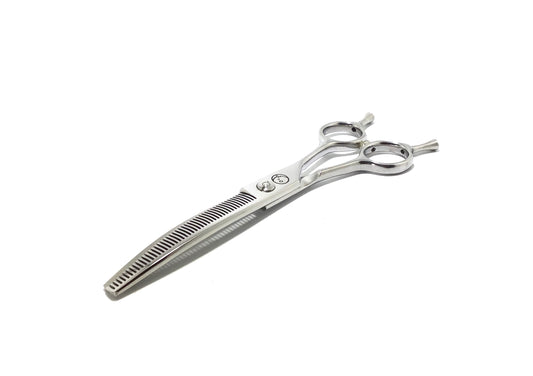
Thinners (or Blenders): Equipped with finer, closely spaced teeth (35+ or up to 50+). They remove less hair per cut, providing subtle blending and softening. Thinners are used to refine transitions, eliminate blunt edges, and achieve a seamless, natural appearance.
Professional groomers often employ a two-step approach: chunkers first to remove bulk and establish shape, followed by thinners to smooth and perfect the finish. This combination ensures efficient workflow and exceptional outcomes.
Advantages of Curved Shears in Dog Grooming
Curved shears offer distinct benefits over their straight counterparts, particularly when working on rounded areas such as the head, legs, ribcage, and feet:
- Enhanced contour following for smoother, more natural rounding.
- Improved precision and control in curved regions, minimizing accidental over-cutting.
- Reduced risk of injury in sensitive areas, such as around the eyes and muzzle.
- Better ergonomics, leading to decreased hand fatigue during extended grooming sessions.
- Cleaner cuts with less pulling, thanks to optimal blade contact along curves.
These advantages make curved shears especially valuable for breeds requiring soft, rounded finishes and for Asian fusion styles. As Harebone Harrison, founder of Harebone Shears, notes: "I love curved chunkers and thinners. Many sharpeners were intimidated by them and scared to sharpen them. Still today many will turn them away or do inferior work on them rendering them almost useless. We embrace them... We were one of the first companies to design them and they essentially made this company what it is today."
Harebone Shears continues this legacy, with all sharpening and repair performed exclusively by Harebone Harrison, specializing in curved chunkers and thinners.
Key Features to Consider When Selecting Curved Shears
To ensure long-term performance and comfort, prioritize the following:
- Tooth Count: Lower counts (22–35) for chunkers; higher counts (35+) for thinners/blenders.
- Balance and Ergonomics: Lightweight construction with offset or flip handles to reduce strain.
- Length: 6–7 inches for detailed work (faces, paws); 7.5–8+ inches for body and larger breeds.
- Material and Edge: Premium Japanese steel with convex edges for lasting sharpness and smooth cutting.
- Additional Features: Options such as silencers for quieter operation, reversible blades, and left-handed models.
For high-quality curved options, many professionals turn to specialists like Harebone Shears, whose collection of curved thinners, chunkers, and blenders (harebonescissors.com/collections/curved-thinners-chunkers-blenders) includes innovative designs tailored for rounded heads and precision work.
When to Use Curved Chunkers
Curved chunkers are ideal for:
- Reducing bulk in thick, dense, or curly coats without flattening texture.
- Shaping heads, ears, legs, and feet to achieve rounded, natural volume.
- Initial blending of clipper lines over larger areas.
- Working on breeds with heavy coats, such as doodles, spaniels, and sheepdogs.
When to Use Curved Thinners
Curved thinners excel at:
- Softening blunt edges and refining clipper-to-scissor transitions.
- Creating seamless blends on fine or straight coats.
- Detailing sensitive areas like faces, ears, paws, and britches.
- Subtle weight removal for a polished, professional finish.
Choosing Between Chunkers and Thinners
Select chunkers when substantial bulk removal and bold texturizing are needed. Opt for thinners when refinement, softening, and subtle blending are the priority. For maximum versatility, most professionals recommend owning both—along with hybrid options (mid-range tooth counts) for intermediate tasks.
Maintenance Best Practices
Proper care extends the life and performance of curved shears:
- Clean thoroughly after each use to remove hair and product residue.
- Oil the pivot regularly and store in a protective case.
- Schedule professional sharpening every 3–6 months. Curved shears require specialized service; many sharpeners avoid them, but experts like Harebone Harrison deliver superior results on these tools.
- Test on practice materials before client use.
Conclusion
Curved chunkers and thinners represent a significant advancement in grooming technology, enabling groomers to produce consistent, high-quality results with greater ease and safety. By understanding their distinct roles and incorporating them into your toolkit, you can elevate your work—delivering finishes that highlight each dog's natural beauty while enhancing client satisfaction.
What are your experiences with curved shears? Which breeds benefit most from them in your practice? Share your insights below. 🐕✂️